


 Airbus A320 flying
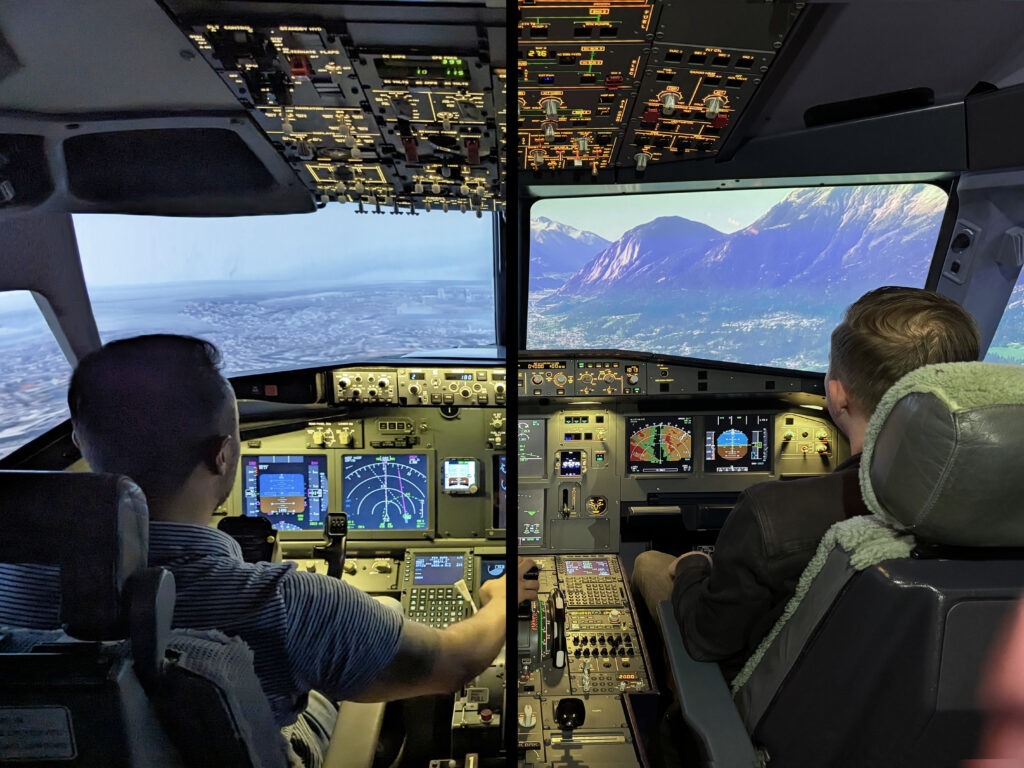
The aerospace industry is a fiercely competitive world, and with that comes the battle between Airbus and Boeing to every aviation enthusiast’s mind. For decades, these two manufacturers have been battling to create the best planes in the sky, each with the ambition to outdo the other in innovation, market share and customer satisfaction. In this blog, we explore the origins, key battles and current state of this rivalry.
At SimFlying, we have both an Airbus A320 and a Boeing 737NG simulator. See more and book your flight in your favorite aircraft!
Origin of the rivalry
The rivalry between Airbus and Boeing dates back to the late 60s and early 70s. Boeing, an American company, had established itself as a dominant force in the aerospace industry with the success of the Boeing 707 and 747. Airbus, a European consortium formed in 1970, aimed to challenge Boeing's dominance by pooling resources and expertise from several European countries.
The rivalry intensified with the launch of the Airbus A300 in 1972, the world's first twin-engine widebody jet. This innovative aircraft challenged the status quo, prompting Boeing to respond with improvements of its own. The stage was set for a decades-long battle for dominance in the commercial aircraft market.
Important 'battles' and innovations
One of the best examples of this rivalry was the battle between the Airbus A320 and the Boeing 737. The A320, introduced in 1988, featured fly-by-wire technology, making it more efficient and easier to operate. Boeing responded with upgrades to the 737, which resulted in the 737 Next Generation (NG) series following the Classic. This battle continues to this day, with both manufacturers constantly innovating and improving their aircraft, but with Airbus gaining market share in Europe.
In the widebody segment, the competition between the Airbus A380 and the Boeing 747 attracted a lot of attention. The A380, the largest passenger aircraft in the world, was Airbus’ attempt to conquer the long-haul market. Boeing responded with the 747-8, an improved version of its iconic jumbo jet. While the A380 initially attracted a lot of interest, the market for super-large aircraft ultimately proved limited, leading Airbus to end production of the A380 in 2021.
The current state of affairs
Today, the battle between Airbus and Boeing remains fierce, but with new challenges and opportunities. The recent focus is on sustainability and technological progress. Both companies are investing in the development of more sustainable aircraft, aiming for a reduction in CO2 emissions and greater fuel efficiency. The Airbus A350 and the Boeing 787 Dreamliner are examples of modern, efficient aircraft that meet these demands.
The development of the battle between Airbus and Boeing has taken a new turn in recent years after the Boeing 737 MAX incidents, in which two tragic crashes led to global groundings and serious reputational damage for Boeing. These events gave Airbus a significant advantage, as airlines worldwide reconsidered their trust in Boeing and turned to Airbus for reliable alternatives. The crisis forced Boeing to make in-depth revisions to its safety procedures and certification processes, while Airbus increased its market share and strengthened its position as a reliable aircraft manufacturer, significantly changing the dynamics of the competition.
In addition, geopolitical dynamics play a role in this rivalry. Trade disputes and political tensions can affect aircraft sales and development, further complicating competition.
Ready to see how Snowflake works?
The rivalry between Airbus and Boeing is the story of continuous innovation, strategic maneuvers, and an incessant battle for market share in the air. As both companies continue to compete, we are seeing a trend towards Airbus in Europe. This is also the case in the Netherlands, which has traditionally been a Boeing country. You can read more about this here.
Book your flight now with SimFlying via www.simflying.nl/boeken!