

 Assessment training Airbus A320
Who provides an APS-MCC training?
When choosing an APS-MCC, you probably look at the simulator, the program, and the price. That makes sense. But at least as important is the question: who is sitting next to you in the simulator as an instructor?
An APS-MCC is not just about learning to fly a larger aircraft. It is primarily about learning to work in an airline cockpit: collaborating as a crew, communicating under pressure, making decisions, applying procedures, and professionally handling normal and unusual situations. For this, you need instructors who do more than just explain which button is where.
What is an MCC Instructor?
Within EASA regulations, there is a specific instructor qualification for this: the Multi-Crew Cooperation Instructor , abbreviated MCCI.
An MCCI may provide instruction during the practical part of MCC courses that are not combined with a type rating. For aircraft, this therefore also applies to practical MCC training in a suitable simulator, such as an FNPT II MCC.
What experience must an MCCI have?
EASA sets clear experience requirements for someone wishing to become an MCCI. For aircraft, a candidate must, among other things, possess or have held a CPL, MPL, or ATPL in the appropriate aircraft category. Additionally, for aeroplanes, a minimum of 1.500 hours of experience as a pilot in multi-pilot operations is required, of which at least 350 hours must be in the appropriate aircraft category.
That is important because MCC instruction is not just about theory. A good instructor must understand how a multi-crew cockpit works in practice. Not from a book, but from operational experience. For that reason, at SimFlying we work with experienced pilots with thousands of hours of experience.
What training does an MCCI follow?
An MCCI does not automatically become an instructor simply because he or she has airline experience. EASA also mandates specific (MCC) instructor training. This training comprises 25 hours of theory and multiple simulator sessions where practical instruction is provided. The practical training focuses on the ability to provide instruction within MCC training. In doing so, the candidate must demonstrate that he or she can not only fly, but also effectively coach, observe, provide feedback, and recognize and correct errors.
What knowledge must an MCC Instructor master?
An MCC Instructor must master more than just aircraft systems. The training and knowledge base focus on the combination of technical knowledge, instructional techniques, and airline operations.
This involves, among other things:
- Crew Resource Management;
- Threat and Error Management;
- human factors;
- SOP usage;
- briefing techniques;
- division of tasks between Pilot Flying and Pilot Monitoring;
- normal and deviating procedures;
- decision-making under pressure;
- providing clear, constructive feedback.
Why is that important for you as an APS-MCC student?
As an APS-MCC student, you don't just want to learn how to technically solve a scenario. You want to learn to think and work like an airline pilot. That means your instructor needs to be able to see what is really happening in the cockpit. Not just whether the checklist is being read, but also whether the collaboration is right. Not just whether the call-out is made, but also whether the communication is effective. Not just whether the landing is safe, but also whether the crew is setting the right priorities en route.
A good MCC Instructor therefore helps you with questions such as: How do you divide tasks in the cockpit? When do you take your time, and when do you need to act quickly? How do you maintain situational awareness? That is exactly where the value of a good APS-MCC lies.
APS-MCC instructors at SimFlying
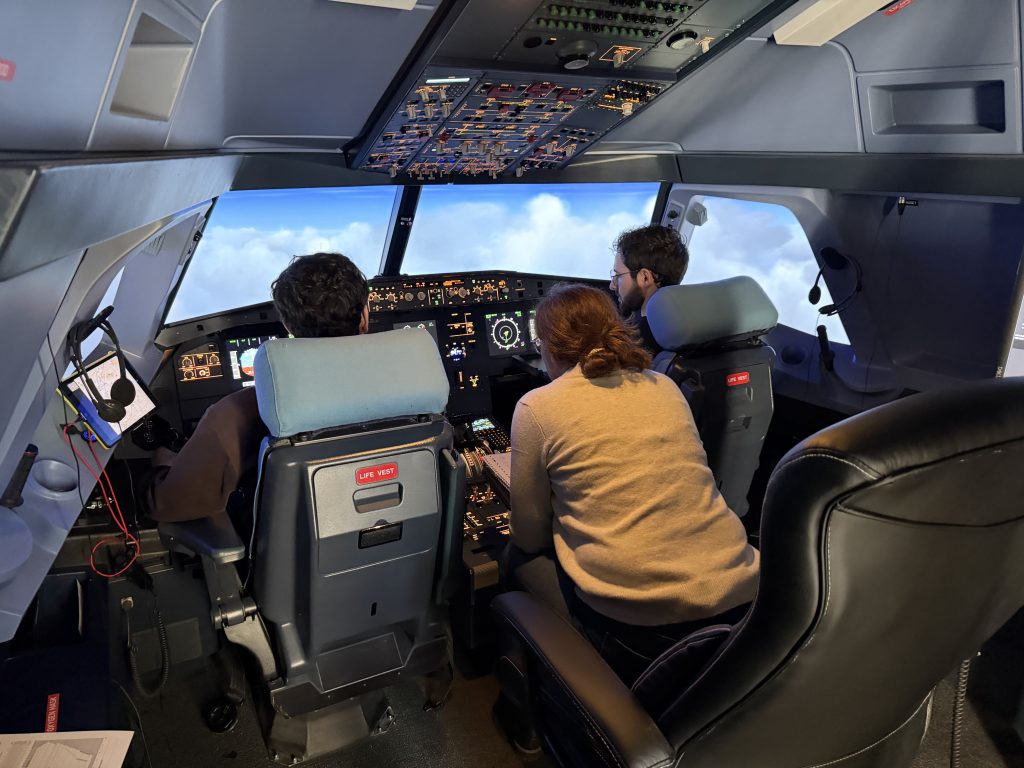
At SimFlying, we believe that an APS-MCC should be as close to real-world practice as possible. That is why we work with experienced instructors with a strong airline background and knowledge of multi-crew operations.
Our instructors bring practical experience from airline operations and translate this into clear, structured training in the simulator. Not only to help you through the course, but above all to prepare you for the next step: operating in a professional airline cockpit.
Because an APS-MCC certificate is important. But the way you learn to collaborate, communicate, and make decisions is ultimately at least as valuable.
Would you like to know more about our APS-MCC on the Airbus A320 simulator? Then check out the information on our website.